
14 October 2026
Community Transport Week 2026 – Tim Houghton & Damian Hinds MP
Getting to a GP appointment, going to an exercise class, meeting friends, getting into town, starting a new job or course. These are everyday journeys, but if you don’t drive or there isn’t a bus that works for you, they can quickly become a problem.
And in rural areas, that problem can be even bigger.
For Community Transport Week, Damian Hinds MP joined Tim Houghton, CEO of Community First, for a chat about transport in Hampshire, what’s working, what could be better and, most importantly, why getting people from A to B is about much more than the journey itself.
For someone who is older or less mobile, that might be a lift to their GP surgery, an exercise class or a community centre. It might simply be the chance to get out of the house, see other people and have a conversation.
Helping people stay connected can reduce isolation and support people to remain healthier, happier and independent in their own homes for longer, something which also fits closely with Hampshire County Council’s focus on prevention.
Community transport teams are increasingly working alongside social prescribers and other local services too. Rather than transport sitting on its own, it becomes part of a much wider package of support around someone. As Tim put it during the conversation, transport can be the “golden thread” running through all of those services. Without it, accessing everything else becomes that much harder.

Could the next generation help keep us moving?
Talking of training or a first Job, we naturally look at where will the next generation of community transport drivers come from?
Volunteer drivers are a huge part of community transport. They help keep services affordable and make it possible for local people and community groups to get to everything from essential appointments to days out and activities. But, like many voluntary organisations, finding enough volunteers isn’t always easy.
Driving is a useful skill in its own right, and as community transport changes, including the introduction of more electric vehicles. there could be new ways to encourage younger drivers to get behind the wheel and volunteer in their communities.

It’s an issue the Community Transport Association has been campaigning on, and one where there is a wider conversation to be had about whether the rules still strike the right balance.
Nobody wants to compromise on safety. But equally, we need to make sure unnecessary barriers aren’t stopping willing volunteers from helping their communities.
It’s the people that make community transport different
Vehicles and routes are obviously important, but there’s another part of community transport that’s much harder to put on a timetable. It’s the human bit.
That’s something worth holding on to as we think about what transport in Hampshire might look like in the future.
The answer doesn’t have to be commercial buses or community transport or voluntary car schemes. They can work alongside each other. We could see smaller vehicles better suited to rural roads, more electric vehicles, demand-responsive services and vehicles that are accessible but still look and feel like the buses people are familiar with.
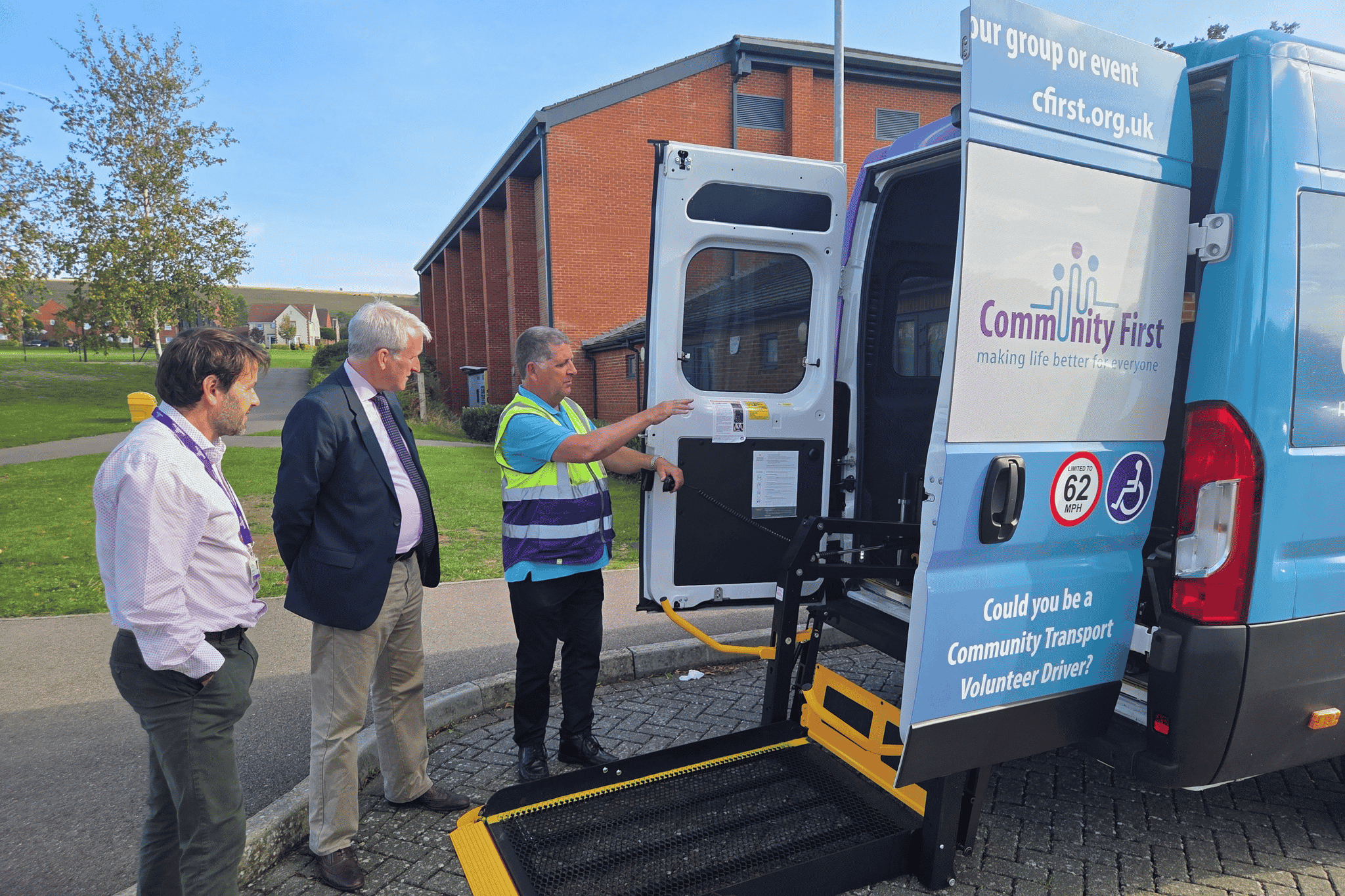
That joined-up approach is particularly important in places like East Hampshire. National conversations about transport can understandably focus on cities, railways and large bus networks. But rural communities have very different needs.
People still need to get into their town centres and high streets. They need to reach shops, services, jobs and activities. And those places need people to be able to reach them as well, for our local communities to thrive.
Through Hampshire’s wider bus partnership work, there’s an opportunity for commercial operators and community transport providers to work more closely together. They do different jobs and have different priorities, but they don’t have to operate in isolation from one another.
One service already helping to fill that gap is East Hants Connect. Jointly funded by Hampshire County Council and East Hampshire District Council, East Hants Connect provides bookable, door-to-door accessible transport for people who find it difficult to use public bus services.
That could be a journey to an appointment, a trip into town, an activity or simply somewhere a passenger wants to go.
A journey can mean someone keeping their independence. It can mean getting out of the house when they otherwise wouldn’t. It can mean seeing friends, looking after their health or continuing to be part of their local community.
And sometimes it just means a chat with a familiar driver on the way. That’s really what this year’s Driving Communities Forward theme is all about. Community transport might start with getting someone from A to B, but what it really delivers is connection.

Community First operates Community Transport services across several districts in Hampshire: